One of the telltale signs of the impending arrival of summer are the sounds of insect mating calls that can sometimes be deafening on certain evenings. These insects are cicadas, katydids, and crickets. Cicadas are large insects related to aphids and other insects that feed on plants with sucking mouthparts. There are many species of cicadas that appear each year during the summer. These are called annual or dog day cicadas and have a different life cycle then the periodical cicadas that emerge every 13 or 17 years. This year is special as the 13-year brood will be emerging across the Southeast and certain areas of North Carolina. The highest emergence of periodical cicada will be in the western part of the state; however, we will see some emergence here in Nash County. After emergence and once mated, female cicadas use a saw-like structure to insert eggs into tree limbs. Once the eggs hatch the cicada nymphs crawl or drop to the ground and burrow into the soil looking for tree roots to feed upon where they either emerge the following year (annual cicada) or wait for 13 years (periodical cicada).
Cicadas, Katydids, & Crickets
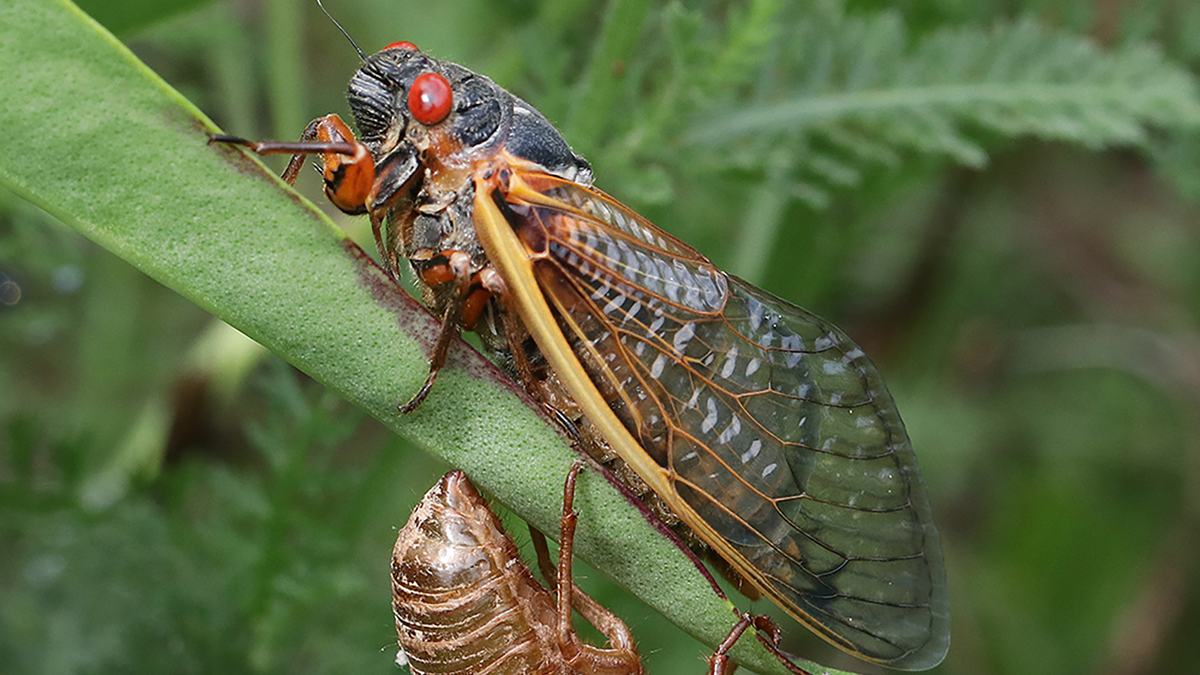
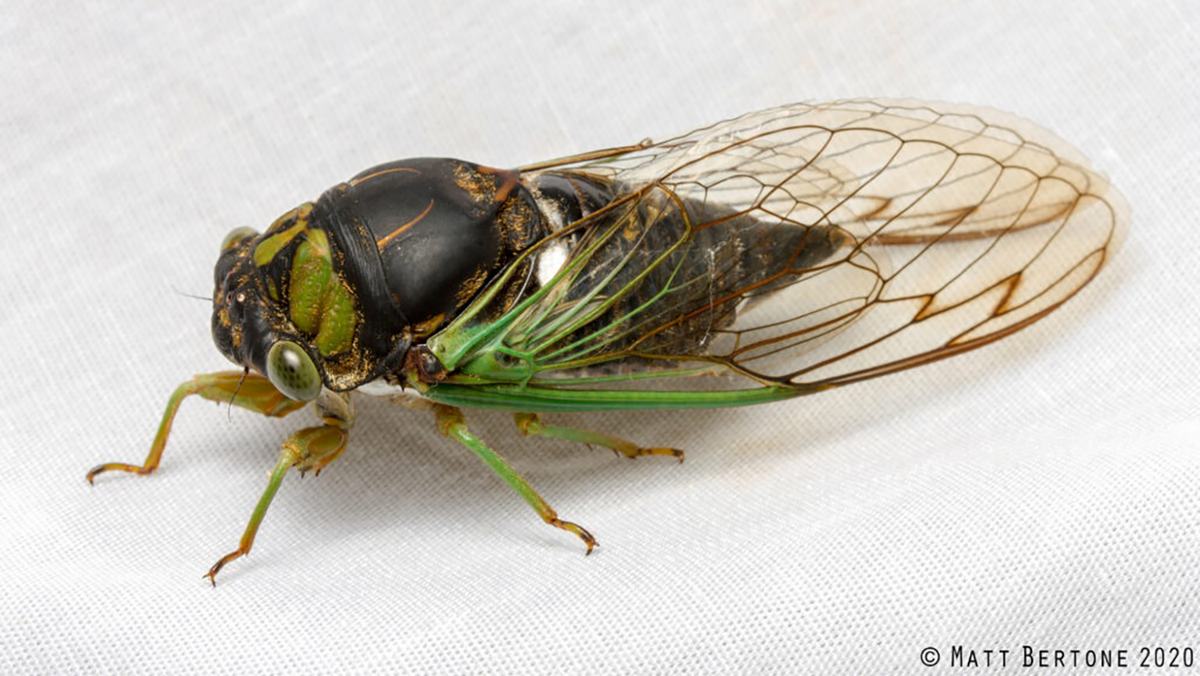
Annual cicadas are larger than their periodical cousins and are black & green in color. Periodical cicadas are slightly smaller, have large red eyes and orange wing veins. The sound we hear are from the male cicadas looking for a female. Males rest on tree trunk and “sing” to attract females, producing a periodic whine from vibrating membranes in the sides of their abdomens. Cicadas generally call during the day to early evening hours. All cicadas are harmless to humans and pets and provide many ecological benefits such as a food source for various animals. Generally, cicadas do not cause enough damage to plants for concern. However, if you have young plantings of woody plant species you can use fine netting to prevent females from laying eggs. Make sure to secure the netting well so cicadas can’t crawl up underneath and remove any netting once the threat has passed.
Katydids are sometimes referred to as brush crickets although they are more closely related to grasshoppers. They get their common name from their mating call which sounds like someone saying “Katy did, Katy didn’t” repeatedly. They will also use a chirping call as well. Katydids are masters of camouflage and mimicry and often resemble the shapes and colors of leaves. Katydids are leaf-eaters but usually don’t cause enough damage to plants to warrant control.
On the other hand, crickets have a high-pitched chirping sound and during the summer crickets, katydids, and cicadas all produce their sounds together which at a distance sound like a continuous background hum. Once the first killing frost arrives in the fall these sounds of summer come to an abrupt halt as the insects succumb to colder temperatures.
Join our mailing list!
Enter your email address to receive updates.